AGVs with lift tables: transport designed around assembly
A mobile platform can combine component transport with positioning at working height. What should you check before integration?
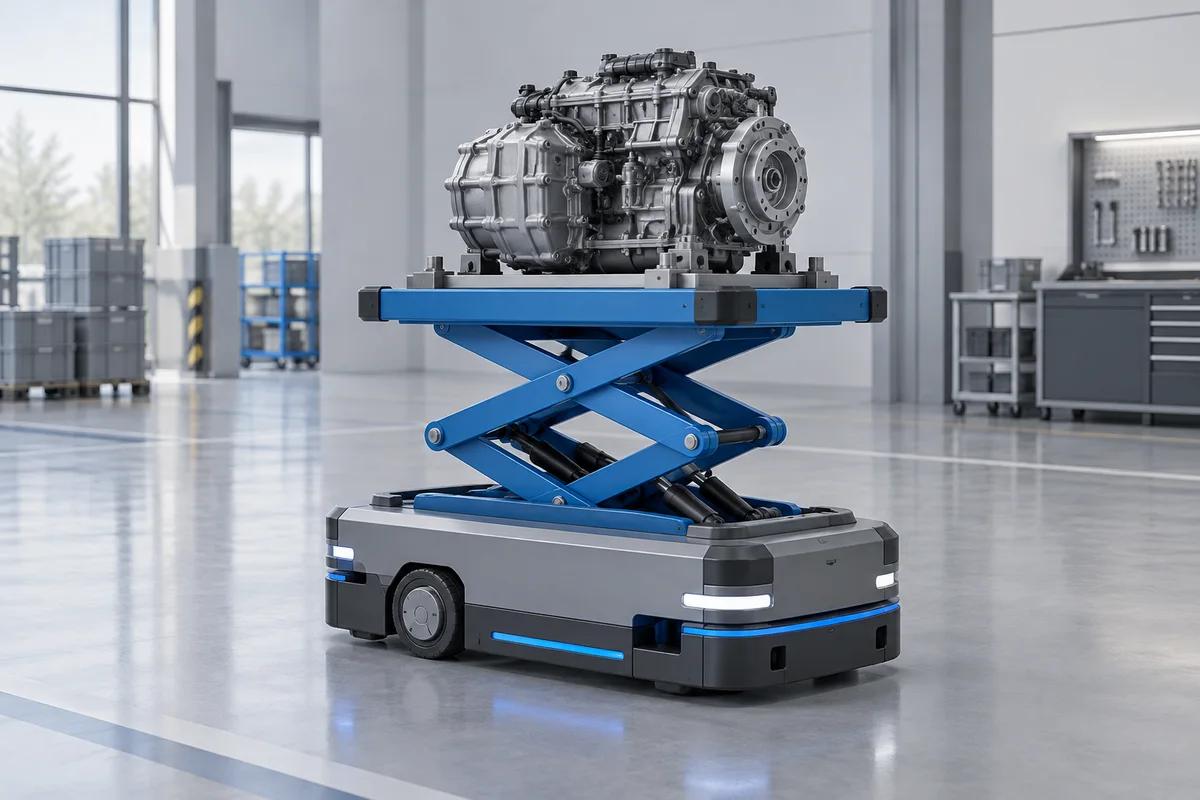
Computer-generated concept illustration — it does not depict the installation described.
From transport to workstation
In an example described by HYMO, Jernbro combines AGVs with lift tables in production automation, including truck engine manufacturing. A vehicle can transport components between stations or accompany assembly, positioning the component at the required height.
Define the process before selecting equipment
When planning this type of workstation, start with the component journey: where it arrives from, where work takes place and how it reaches the next stage. Record its weight including fixtures, centre of gravity and required height range. Rated capacity alone does not describe every operating condition.
Also establish who is responsible for signal exchange between the vehicle, lift and production line. Stopping at the transfer point, position confirmation and maintenance access should be defined before choosing a model.
How can you assess the business case?
Compare the complete work cycle, rather than the purchase price alone. Measure transport time, waiting time and manual transfers. Then test the assumptions with the actual load. Reliable savings estimates require data from the specific facility.
An EasyLink editorial based on manufacturer material. The example described is not an EasyLink installation.